
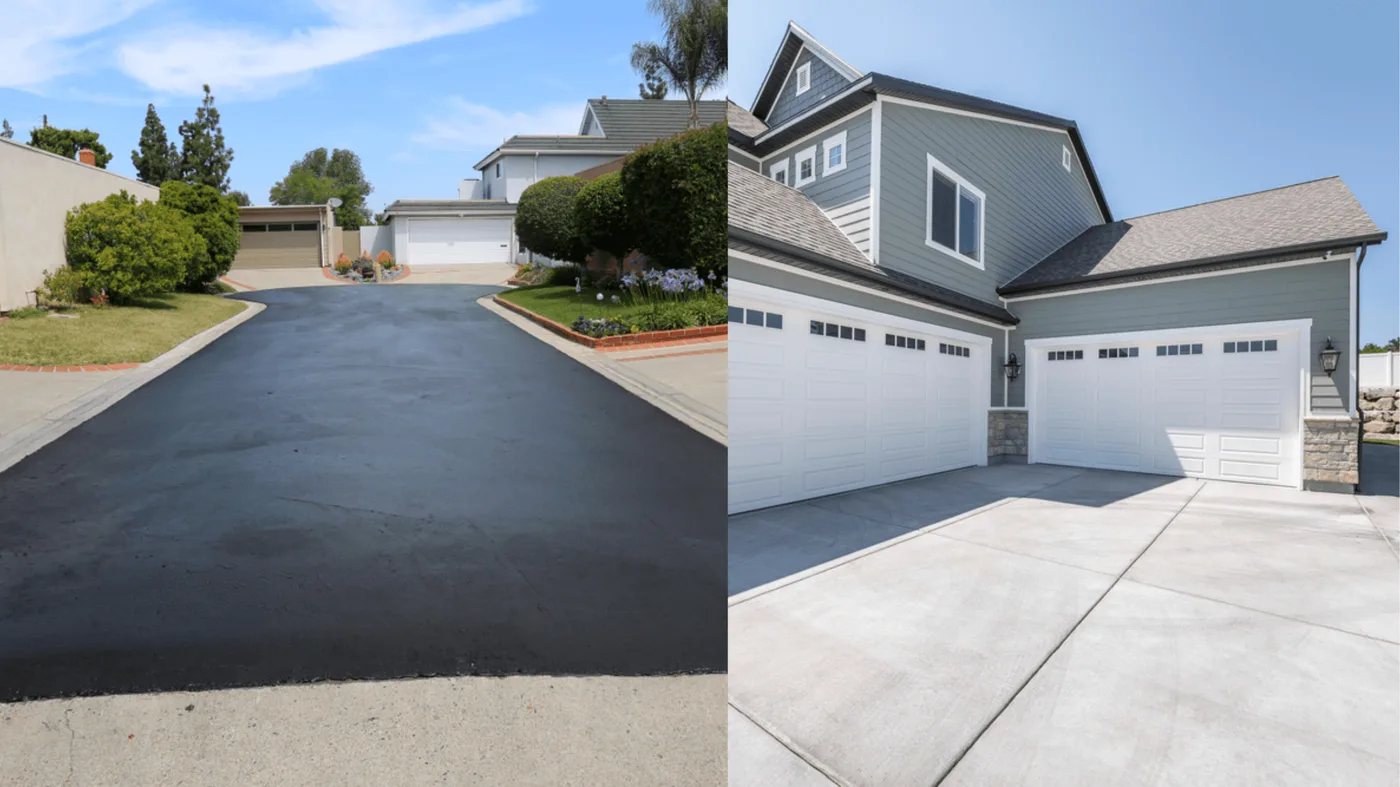
Concrete or asphalt driveway in Arizona: which should you choose?
For an Arizona driveway, concrete usually wins. Asphalt costs less upfront, but black pavement runs 40 to 50 degrees hotter than the air, softens in extreme surface heat, and needs sealcoating every 3 to 5 years, while concrete lasts roughly twice as long with minimal upkeep in the same sun.
That is the short answer. The long answer is more interesting, because Arizona is close to a worst-case climate for one of these materials, and the city of Phoenix has produced some of the best evidence on the question without meaning to. If you land on the concrete side, our concrete driveway page covers how we build them for East Valley ground. Here is the full comparison.
The comparison at a glance
| Concrete | Asphalt | |
|---|---|---|
| Installed cost per sq ft | $8–$20 | $7–$15 |
| Lifespan | 30–40 years | 15–20 years |
| Maintenance | Occasional sealing | Sealcoat every 3–5 years, resurfacing later |
| Surface in summer sun | Reflects roughly 30–50% of sunlight | Reflects roughly 5–12%, runs 40–50°F above air temp |
| Behavior at extreme heat | Stays rigid | Binder softens, can rut and scuff under tires |
| 30-year cost, 600 sq ft (published comparison) | ~$6,500–$8,000 | ~$8,000–$10,000 |
Cost figures are national 2025 to 2026 published ranges, and the 30-year totals come from HomeGuide’s comparison math. Now the Arizona part.
What 115 degrees does to asphalt
Asphalt is aggregate held together by a petroleum binder, and that binder responds to heat. Weather industry data puts black pavement 40 to 50 degrees above air temperature in full sun, which means a 100 degree Phoenix afternoon is a 150 to 160 degree driveway. Paving industry sources note asphalt starts softening once surface temperatures climb well past the 90s, and a softened surface takes marks: tire scuffs from turning wheels, ruts where a heavy vehicle parks in the same spot, tracked residue on shoes in the worst of July.
Heat also ages it. The sun oxidizes the binder, the deep black fades to gray, and small cracks open for monsoon rain to exploit. That is why the sealcoating cycle exists. It is real protection, and it is also a permanent subscription: every 3 to 5 years, typically a few hundred dollars a visit, for the life of the surface.
Concrete has its own Arizona failure modes, and we are honest about them in why concrete cracks in Arizona. But heat is not the enemy of a cured slab the way it is the enemy of a black flexible surface. Concrete stays rigid at any temperature a driveway will ever see.
The Phoenix cool pavement evidence
Here is the detail that settles the heat question. Phoenix runs a cool pavement program: the city coats asphalt streets with a lighter, reflective surface layer specifically because plain asphalt traps heat. Untreated Phoenix asphalt reflects only about 12 percent of sunlight. The coating raises that to the low-to-mid 30s, and the city’s study with Arizona State University measured coated streets running cooler, up to about 12 degrees lower at noon. The city has applied it across well over a hundred miles of streets.
Read that as a homeowner. The city’s fix for hot asphalt is making asphalt lighter. New concrete already reflects roughly 30 to 50 percent of sunlight on its own, right in the range the coating is chasing. One surface needs a program to behave like the other one does by default.
To be fair to asphalt, there are reasons roads use it anyway: it is cheaper per mile, and a road crew can resurface a lane overnight. Those are network logistics. A driveway does not get resurfaced lane by lane, and the upfront saving on 600 square feet is a few thousand dollars against a surface that will need replacing 10 to 20 years sooner.
Lifespan and the 30-year math
Published comparisons are consistent: asphalt is a 15 to 20 year surface and concrete is a 30 to 40 year surface. NerdWallet’s 2025 comparison puts concrete’s average around 27 to 28 years with proper care and notes asphalt’s maintenance load in hot climates. HomeGuide’s long-run math for a 600 square foot driveway lands concrete at roughly $6,500 to $8,000 over 30 years against $8,000 to $10,000 for asphalt, because one sealcoat cycle and a mid-life resurfacing quietly erase asphalt’s upfront advantage.
There is also the option asphalt does not really offer: looks. A concrete driveway can be finished plain, colored, or stamped and decorative, which is part of why it reads as the premium surface at resale. And if your existing driveway is the thing failing, start with repair versus replace before assuming a full tear-out. For pricing detail on the concrete side, the driveway cost guide has current market ranges.
FAQ
Is a concrete driveway cheaper than asphalt? Not upfront. Asphalt runs about $7 to $15 per square foot against $8 to $20 for concrete. Over 30 years the order flips once sealcoating and resurfacing are counted.
How much does a 20x20 asphalt driveway cost? Around $2,800 to $6,000 installed at national rates, plus a sealcoating visit every 3 to 5 years for as long as you own it.
How much does a 1,000 square foot concrete driveway cost? Roughly $6,000 to $15,000 installed at Arizona market rates, driven mostly by finish and site prep.
How long does asphalt last in this climate? It is a 15 to 20 year surface, and extreme heat works against it. Concrete in the same sun is a 30 to 40 year surface.
Why do cities still pave with asphalt? Lower upfront cost and overnight lane-by-lane resurfacing suit road networks. Phoenix now coats its asphalt lighter to fight heat. Concrete starts out light.
Does a lighter driveway really stay cooler? Yes. Phoenix’s program measured up to about 12 degrees cooler at noon on coated surfaces, and concrete reflects several times more sunlight than fresh asphalt.
Pick the surface once
A driveway is a 20 to 40 year decision, and in this climate the materials do not age the same. DC Construction and Development pours concrete driveways across Queen Creek and the East Valley, built for the ground and the heat they will actually live in. If you are weighing the two, ask for a free estimate and we will give you the concrete number straight so you can compare for real.